last page next page
table of contents
My Eighth Year
A very eventful year. I've had a difficult time thinking about how to organize all the stories of my eighth year. I've decided not to include a lot. Some of these stories are repeated and maybe expanded a bit in other places in this volume.
The tale will be told from 4 different perspectives.
The first perspective is basically from my eight-year-old eyes. I was experiencing a lot of discomfort. My arms and legs were bruised a lot, my shins were always bruised very badly. My glands were swollen, my hips and knees hurt, and there were dramatic bloody noses. My parents were obsessed about my bowels. I was having great trouble breathing. I remember adults making snide remarks that I needed to lose weight or I read too much, or I needed more exercise, and that's all I needed to do, and all would be well.
Here was the final sign that something really was wrong. My parents had a dichondra lawn. My parents would send me out to pull weeds. I was sitting on the lawn, resenting my parents, breathing very heavily, and then the next I knew I woke up in an oxygen tent at a little clinic a few blocks away.
After that someone took my health more seriously. Many visits to many doctors. They didn't tell me, but I had leukemia. They told me I had asthma.
A few years ago, an 98 year old oncologist at Children's Hospital, who may have seen me as a patient, said that the survival rate at that time was 5%, I was probably too far along, and they probably told my parents to take me home, make me comfortable, not to tell me anything, and to let them know when I died. This was how it was done according to the old oncologist.
My dad did not accept this.
He took me to the cancer clinics in Tijuana.
I don’t remember the first visits to the cancer clinics in Tijuana. I wish I could remember if my mother went with us. It just occurred to me that this must have happened just before my birthday. Maybe it was the third visit before Dr. Farias started what would become my life five days a week for 10 months. There was daily bloodwork, I had two to four shots and injections every couple of hours in my arms, two shots in my butt muscle, an intravenous bottle, and an hour inhaling some gas. After a couple of weeks I asked to do the IV and the gas at the same time. They called the tank of gas David’s bottle.
My dad quit his job. We moved to my grandmother‘s house. He sold the two houses on Kern and Eagle. Remember, this was before medical insurance. He sold the station wagon. He decided we would drive every day to Tijuana. Thinking about the long daily drive, my dad bought himself an Alpha Romeo. (The story of buying that car here )
When the school year started we made an arrangement that I would get textbooks, and every Friday, we left home a bit later than usual, and went in early in the morning before school started, to take tests and talk to the teacher. That’s how I did third grade. I loved it.
Spending all that time with my dad was special. The drive to San Diego took 3 hours minimum each way. On the drive back, he would ask me to tell him about what I was reading, or the plots of movies or cartoons in order to keep him awake. I thought it was so fun.
There were times like when driving on Pacific Coast Highway in Encinitas, there was no interstate yet, we passed the buildings of the Self-Realization Fellowship which looked like this cool place with the architecture of India. I always asked my dad if we could stop and see what it was about, but he always said another time, or next time, or one of these days. Later, about nine years later, at another of their places in Hollywood, I learned meditation and yoga. The same thing happened seeing the roller coaster at Mission Bay. I asked my dad if we could stop, and we never did, or maybe we did once. Many years later when Sarah and the kids and I were walking up the west coast, we went to that roller coaster in Mission Bay. Thank you, Sarah. It’s a good roller coaster.
Since I was with my dad, it follows that many Tijuana memories are of food. I have to tell you about cahuama, the loggerhead sea turtle. There was a big roadside stand, actually a collection of shacks, where they only served tacos and soups made of sea turtle. A very delicious animal. And different parts of the body had very different textures and tastes. If they ever make it legal again to eat the sea turtle, don’t miss it. My cousin Leo once told me that his favorite memory of my dad was when they dropped me off at the clinic and the two of them went and stuffed themselves with cahuama.
The story of my illness.
Long before I was born, my mother found that she was not able to have children. She kept having miscarriages. Dr. Burkholder gave her this new very high dosage hormonal treatment. Specifically, DES (diethylstilbestrol), a synthetic estrogen.
Well, it did the trick, here I am. It is good she took it. But DES gave me a lifetime of bad health, especially hormonal bad health. It gave me a couple of interesting birth defects. And not uncommon among children born as a result of this drug, the gift of cancer, it gave me leukemia. It also gave my mother cancer, but not till I was 19.
The clinic also treated me for the birth defects. That resulted in me going through early puberty at 8. Every endocrinologist I’ve talked to has said that treatment saved my life.
In my early 30s my health took a big dive. One doctor called it a hormonal breakdown. Another called it a blood immune system breakdown. One of the symptoms was that my white cell count was low but at the same time my lymph glands were working overtime. Doctors told me that it was similar to leukemia, but it wasn’t cancer. When I told this to my mother, she went pale and almost fainted.
There aren’t many unpleasant memories of the treatment in Tijuana. The earliest days there aren’t in my memory at all. The shots and IV were uncomfortable, but not really painful. I had been feeling sick, I think I liked feeling better. It’s possible that I lost my hair, but I don’t remember that. But pictures the next summer showed me with a crew cut.
The treatment in Tijuana worked, I am here. I am not sure how much of my lifetime bad health is a result of the DES, leukemia, or the treatments in Tijuana. But I’m here.
(if your idea of fun is reading more about my health, here it is )
Stories of the clinic.
A lot of time was spent in the waiting room. And during the hour in the chemotherapy room breathing whatever gas they were giving me, and the IV bottle, I often got to talk for an hour with someone getting their therapy in the chemotherapy chair.
Usually, I was the only kid around. Surrounded by older people who had been told by their doctors to go home to die, and being there they were in Tijuana, their last hope. I’d say 2/3s of them died, but 1/3 of them left alive and better.
A couple of favorite stories.
The usual group was sitting in the waiting room and an older couple came in, the man wearing a hat with a veil. But before too long, the smell of death, of rotting meat, filled the room. One guy ran outside and vomited. The new man was taken back into the examination rooms.
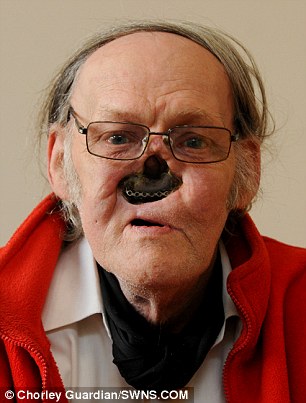 When they came out again, I asked to see his face. He lifted the veil and his nose and one cheek looked like hamburger, and it stank. A week later, he came back in with a bandage on his face that looked rather flat. I went and asked him what had happened. He said, They removed all the cancer. And I said, Did they take off your nose? Yes, said the man. Can I see? He took off the bandage and he had no cheek and he had no nose and I could see his cheekbone and I could look into his sinuses. It was one of the most wonderful things I had ever seen.
The next time he came in he had a nose and a cheek.
Can you take it off? I asked,
Yes, says he.
Let me see, says I.
So he took the nose and the cheek off and there it was. The same bones and sinuses as before, a little less raw, and he showed me the prosthetic nose, and how to put it back on.
He never came back to the clinic. We heard that he died soon after getting back home.
A man came in one day and I noticed after a while his left hand looked like a cartoon hand. A thumb and three fingers. I had to ask, and he told me the story.
He was a railroad man. One day, hopping off a train, his wedding ring got caught on something, the train kept going but he didn’t. His finger was ripped out. Not just his finger, but the finger bone in the palm of his hand was taken out from the wrist. He said the hole quickly healed up. The web between his middle finger and pinky looked normal, except that he only had the three fingers.
(more waiting room stories here )
I spent these days with sick, frightened older people who needed someone to share their wisdom with, and I was a kid and a captive audience. The wisdom was fairly typical but I do remember these that were important.
Don’t regret anything you do, and don’t do anything you would regret.
Excellent advice. Difficult to learn.
Given two choices, choose the one you will regret the least.
I think of this almost daily
And then this important wisdom....
A man said that all you were left with, all that you can have with you in a waiting room in a cancer clinic in Tijuana, are stories. He told me to collect stories. Learn to tell stories. Preserve the stories.
I took that wisdom pretty seriously. I learned to collect stories. I learned to tell stories. And I’ve had a life that generated some decent stories. And you get to read them here.
(Find a collection of other waiting room wisdom, and wisdom from other places too. )
Then there were adventures.
At the clinic, I was usually the only kid. There was a family who occasionally came in. There were three boys, the oldest and youngest had this disease. I wish I could remember the name of the disease. They had been going to the clinic before me, and the doctor had kept the oldest boy, Brian, about my age, alive three or four years beyond when children with that disease die.
The symptoms were wonderful. He had no hair, he had pale blue eyes that kind of looked like fish eyes. His skin was translucent. His eyelids were translucent. If you looked carefully, you could see the bones and veins and muscles under his skin. He kind of looked like a guppy.
His skin was kind of like paper. We were talking and playing in the waiting room and I gave him a little punch and his mother threw a fit. His skin could actually tear and break from something like that. Brian's reaction to that punch was that we were going to be best friends forever. I wasn't treating him like a freak.
Brian was great fun.
I think the baby died while I was still going to the clinic .
(more about them and other Tijuana kids here )
My treatment lasted for 10 months. After a month or so, my dad would go out and be himself somewhere. The staff at the little cancer clinic really weren’t there to watch after me when I wasn't being treated. Wandering outside and across the street to play in the park and made friends with some of the neighborhood boys. We would go a few blocks down to the main drag in Tijuana. We would go to the back doors of the bars, and strip clubs, and restaurants and beg for food. It was so much fun and so much good food.
At dinner time I would innocently suggest to my dad, Why don't we go to that restaurant? I didn’t tell him that I had already been during the day.
I would guess my blood tests eventually showed the cancer was gone. It took about 10 months. I returned to school for a month or so of third grade.
A rocket scientist was asked how good he felt about
a successful launch. He said, “We don’t see them as successful,
we see them as not failing.”